



More than miles: learning to listen
Distance riding is often misunderstood as a question of distance—how far, how fast, how long.
In reality, it is a discipline defined by physiological management and decision-making over time.
Across formats, progression is not determined by speed or completion alone, but by whether the horse can:
- Recover within defined parameters
- Maintain metabolic stability
- Remain structurally sound under load
This means that every ride is governed by a simple principle:
You do not finish because you can go farther.
You finish because nothing failed along the way.
The difference is not semantic—it changes how you train, how you ride, and how you decide.
Distance riding requires a shift from execution to regulation.
From following a plan to continuously adjusting it.
From reacting late to recognizing change early.
Frameworks like P.A.C.E are useful not because they prescribe what to do, but because they structure how to think under uncertainty—how to define limits, interpret signals, and make decisions before small deviations become irreversible problems.
This is what makes distance riding technically demanding:
not the distance itself, but the requirement to manage a living system under stress, in real time.
Sunday – Distance Riding 101
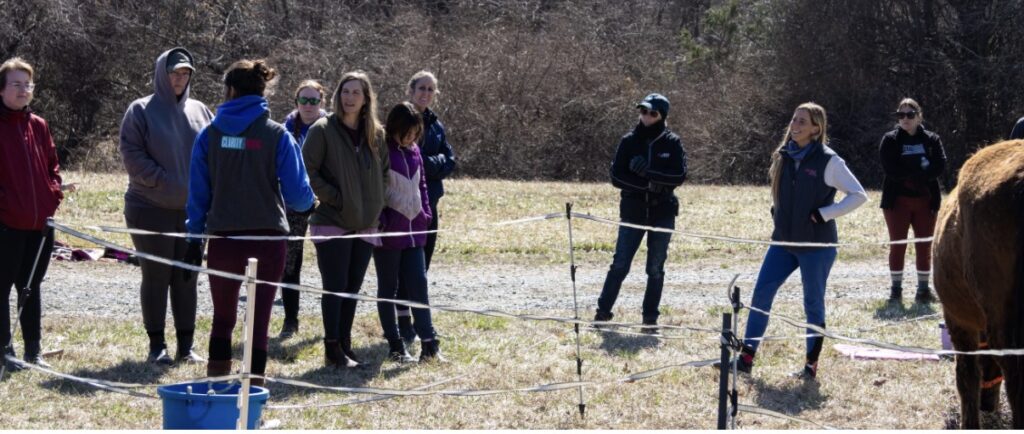
his Sunday at 3 PM, I’ll be hosting a Distance Riding 101 hybrid session (in-person + virtual).
We’ll focus on:
- How to read and prioritize physiological signals
- How to think about training and conditioning with intent
- What actually determines whether a horse continues—or gets pulled
If you are starting out, or if you want a clearer framework for how to make decisions while riding, this session is designed to give you that structure.
Leave a Reply